Menu

Tobacconist University
Get Certified    |    Campus Store    |    R&D Lab    |    FAQs

Showing posts with label final exam review. Show all posts

Tuesday, July 14, 2009

Cigar Anatomy: Final Exam Review


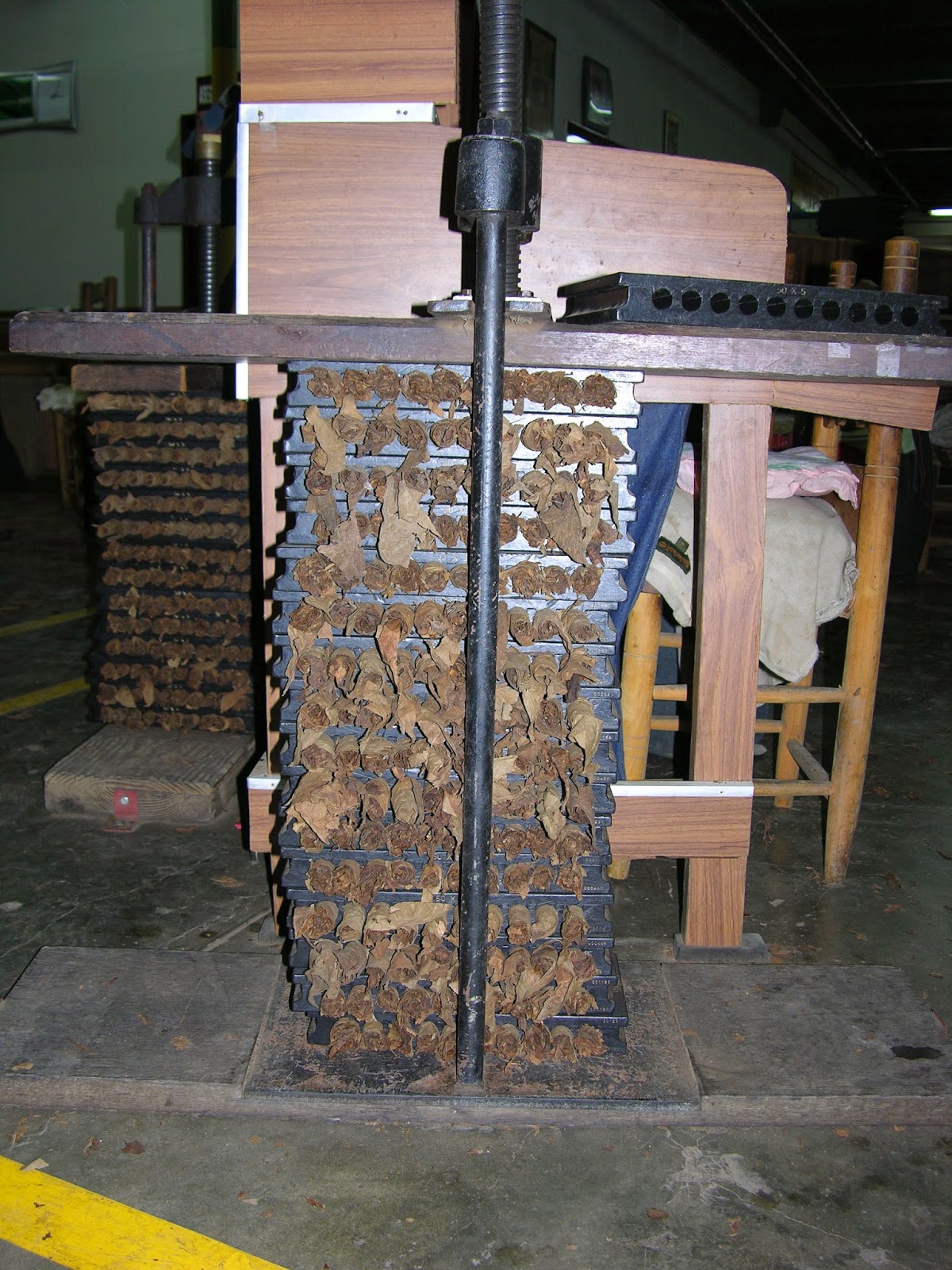
Premium cigars are composed of long filler, binder, and a wrapper. They are made exclusively by hand, although the bunch (binder+fillers) can be created using a Lieberman machine which assists the roller. In general, bunchers place 3 to 5 filler leaves* together and wrap them with a binder leaf, then place them in a mold and press.  The bunched cigars are rotated in the mold several times, about every 30 to 45 minutes, in order to create an even compression without a seam.  After the bunch is removed from the mold and press the wrapper leaf will be applied.  Wrapper leaves have their entire stem removed and each half of the leaf will be used on separate cigars.  These wrapper leaf halves are mirror images of each other so one will be applied right-to-left and the other left-to-right.  It is important to note that wrapper leaves are prized for their elasticity, tensile strength, consistent color and texture.

*Important Note: filler leaves have only half of their stem removed.  The half closest to the tip of the leaf is the thinnest part and it will remain; the thicker bottom half will be discarded. 


Monday, July 13, 2009

Pipes: Final Exam Review


The most popular materials for tobacco pipes are briar and meerschaum.  Briar comes from burls that form on the root system of the Heath tree while meerschaum is a white, clay-like mineral primarily found in Turkey.  Briar pipes are valued by their age, grain pattern, imperfections, and carving artistry.  Meerschaum pipes are known for their intricate carvings and ability to change color.  Both types of pipe will form cake, which is the carbon that develops along the inner wall of the pipe chamber and acts as insulation for the bowl, as well as promoting an even smoking experience.

While corncob pipes are considered the ‘quintessential American pipe’ because they were invented in America, Hookahs originated in India and were popularized in the Middle East.  Hookahs are considered an indirect smoking system because the smoke passes through water before reaching the smoker’s palate.

Accoutrements: Final Exam Review


Torch lighters require butane fuel to work.  While butane gas lighters are flavorless, liquid fuel lighters will taint the flavor of your tobacco.

Butane lighters must be purged before filling to release excess air build up in the tank.  The proper steps to filling a butane lighter are: turn volume down, empty (purge) gas chamber, and then fill with butane.


There are no ’self-sharpening’ cigar cutters.  The most invasive cigar cutter is the ‘cat’s eye’ a.k.a. V cutter.  Double guillotines have two straight blades while single guillotines have one.

A leather cigar case can quickly dehydrate a cigar while a resealable plastic bag can keep a cigar properly humidified for approximately a week.

Humidors can be made of wood, plastic, tin, or glass.  Furthermore, Spanish Cedar is not necessary for a humidor to work properly; it is a matter of preference and/or tradition.  When seasoning a humidor, one should not saturate the inside of the humidor with water as that can lead to extreme expansion which will damage the joints and/or seal.

Propylene glycol is used in reverse osmosis humidifiers while evaporation humidifiers require distilled water to work properly.

The two main types of hygrometers are analog and digital.  Digital hygrometers tend to be more accurate.

FAQ: Final Exam Review


A perfect guillotine cut will leave ample shoulder on the cigar head; it is best achieved by having a firm grip on the cigar shoulder.

The most common method to treat cigars affected by cigar beetles is freezing the cigars.

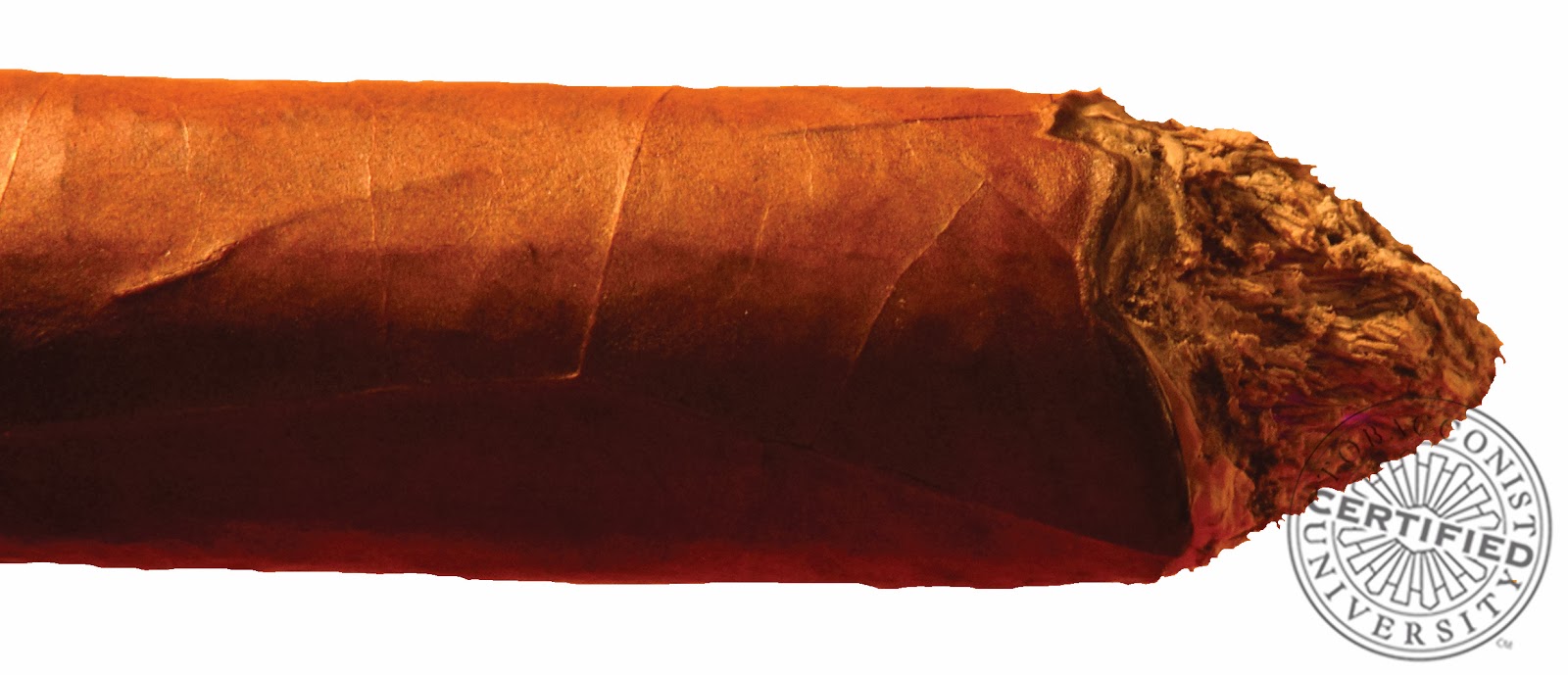
Ring gauge (rg) is the diameter of a cigar – in America rg is measured in 64ths of an inch.  Typically, thicker ring gauge cigars burn cooler and longer than thinner ring gauge cigars.  A cigar that is burning ‘hot’, or too rapidly will yield a pointed ember after ashing.


A well conditioned cigar (70% relative humidity (rh) & 70° F) can age and develop for a lifetime or more.  Over humidified cigars will produce an acrid and bitter flavor when smoked.

While plume, the crystallized evaporated remnants of cigar oils, can be a desirable trait of well aged cigars, mold is not.

MOLD
 
PLUME

Most cigarettes are not premium tobacco products because they contain RTS (reconstituted tobacco sheet), they are mass produced by machine, and they contain chemicals and additives.

Maduro cigars have undergone a longer fermentation to enrich and sweeten the leaf.

Friday, July 10, 2009

History: Final Exam Review


By the time Europeans arrived in America they found the indigenous peoples had been fermenting tobacco and using añejamiento (aging) techniques for thousands of years.
 
John Rolfe was the first N. American settler to cultivate tobacco commercially in Jamestown, VA, in 1612.

Since the discovery of tobacco in the “new world”, punishment for tobacco use has included taxation, imprisonment, spiritual condemnation, and physical mutilation.

In 1676, the “cigar” as we know it today, wrapper, binder, and filler, was ‘invented’ in Sevilla, Spain.  At that time Spain only allowed agricultural production in Cuba, not manufacturing.

The 1700s were characterized by the spreading of tobacco factories throughout Europe.

During the 1800s, the invention of cigar bands and labels helped distinguish what seemed like generic products.  In the process, cigar makers pioneered brand identity, point of purchase and affective marketing.  The introduction of lithography helped cigar makers create cigar bands and labels that were (and are) extraordinary works of art.  Ironically, the quality and attractiveness of cigar bands/labels have little or nothing to do with the quality of the cigars they adorn.

In America, around 1905, there were over 70,000 registered cigar factories and 7 out of 10 men smoked cigars.

By the 1920s, the decline of the cigar industry was precipitated by the cigar rolling machine, financial crash of 1929, and mass production of cigarettes.

The ‘Cuban Revolution’ of 1959 instigated a mass exodus of Cuban cigar makers to the Dominican Republic, Central America, Canary Islands, and the United States of America.